
The Evolution and Economics of Insect Flight

By Samantha Kiever, Research Entomologist, Insects Limited, Inc.
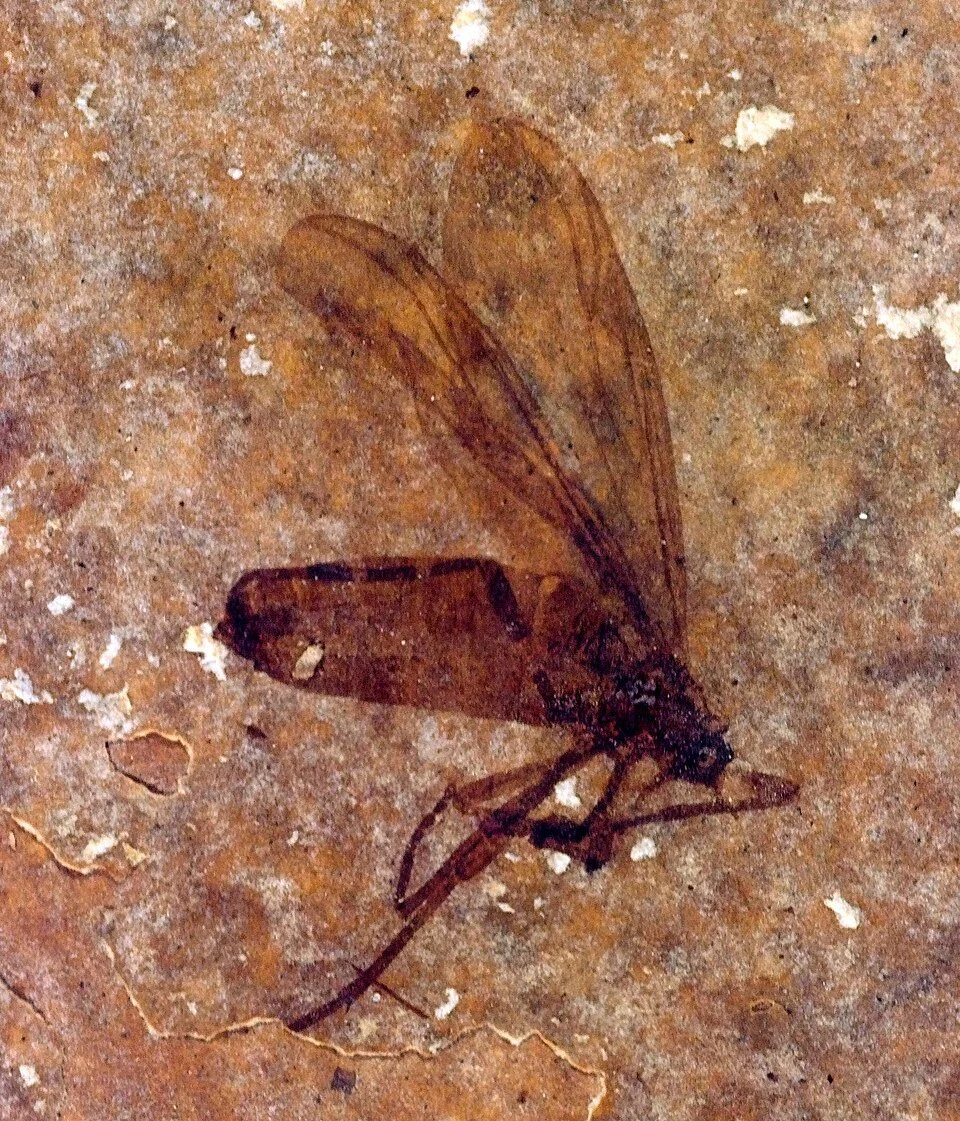
Long before birds took to the skies or mammals ever considered leaving the ground, insects had already solved the problem of flight. In doing so, they reclaimed a dimension of movement that terrestrial life had surrendered in the transition from water to land. The system they evolved is one of the most mechanically elegant solutions in all of biology. It allowed insects to disperse, exploit new niches, and become the most diverse group of animals on Earth.
The Need for Flight
The earliest terrestrial ecosystems were simple. Plants lined pools and banks, staying low, and the arthropods that followed them did the same. Gravity flattened the world in a way life had not previously experienced. Movement was bound to the surface. For a time, this mattered little. The skies were empty, and resources were within reach.
As ecosystems became larger and more complex, plants stretched upward to compete with one another for light. Arthropods faced increasing predation and competition between each other and by early reptiles and amphibians that were joining the land-loving animal crew. By the Carboniferous, dense forests covered the planet, and life had become so abundant that the land itself could scarcely contain it. Life pressed outward in every direction, and eventually, it spilled upward.
Approaches to Flight
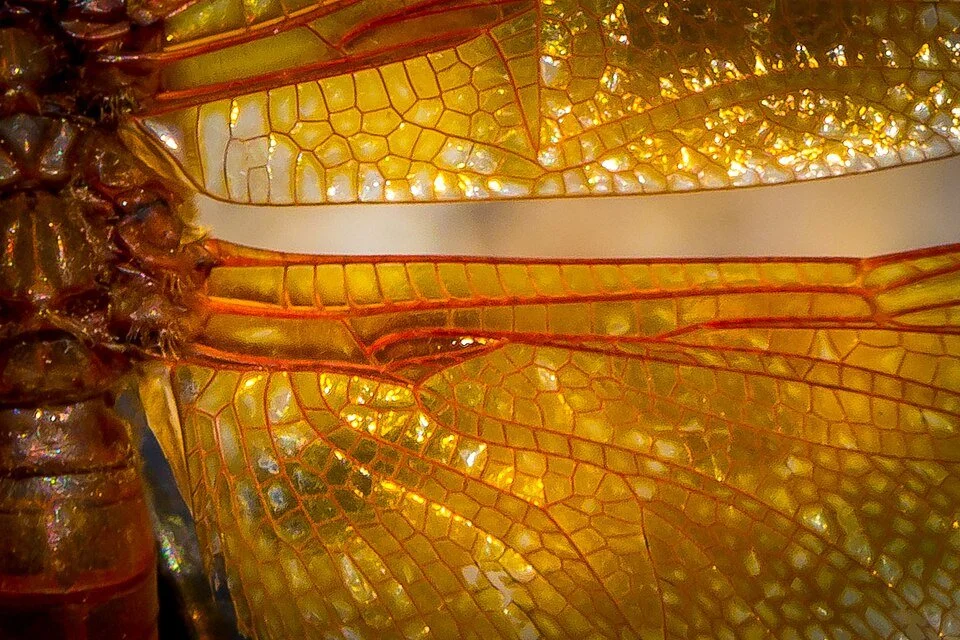
Early insects flew with direct flight muscles: each wing stroke tied to a nerve impulse and muscles. Muscles in this style of flight attach directly to the wings with main sets of muscles, one that when contracted pulls the wing down, and another positioned opposite that, when contracted, pulls the wing back up. This system persists in groups like dragonflies, whose precise control over each wing individually (in conjunction with their strong visual processing) has allowed them to secure and maintain their position as the most successful predators in the whole animal kingdom (95% of attempted hunts are successful).
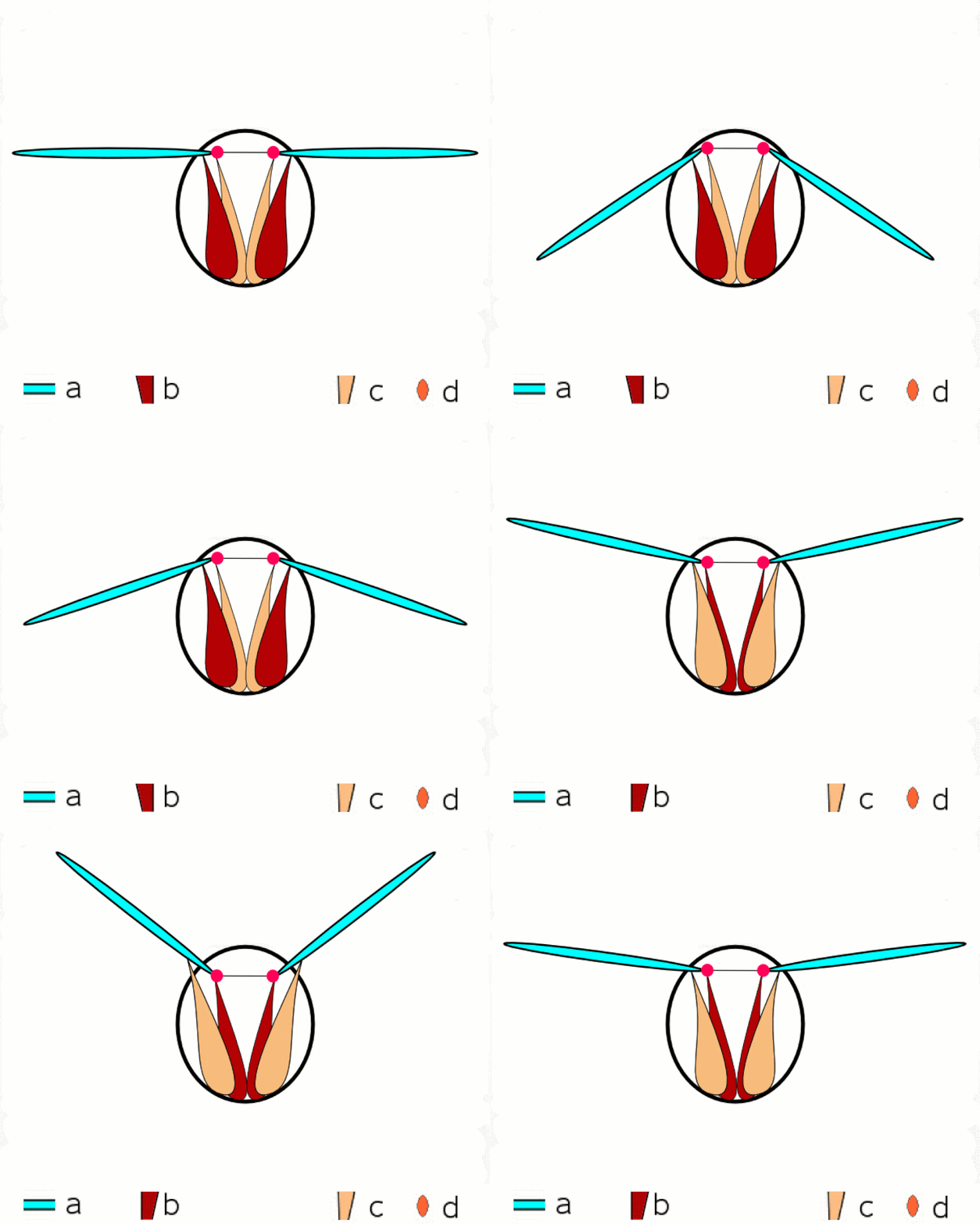
Direct flight in insects. (n.d.). Wikimedia Commons. https://commons.wikimedia.org/wiki/File:Direct_flight_in_insects.gif
More advanced insects evolved indirect flight muscles. In this system, muscles attach instead to the inside of the body wall rather than the wings, and the muscles deform the thorax, thus moving the wings from center either up or down. When compressing the body wall, potential energy gets stored in the cuticle that is then released to supplement the energy utilized in the next portion of the wingbeat. Not only does conserving energy through the stretching and compression of the cuticle make this process efficient, but so too does the asynchronous nature of the muscles often employed.
In order for a large majority of insects to stay aloft with their big bodies and relatively small wings, their wings must beat very quickly – oftentimes much quicker than nerve impulses can be generated. To achieve this, asynchronous flight muscles are stretch activated rather than being activated by a nerve impulse, that way when one muscle contracts to move the wing in one direction, the other muscle being stretched will then contract without a nerve needing to tell it what to do, thus multiple wingbeats can come from a single nerve impulse.
Expense of Flight
Flight, for all its advantages, is not cheap. Wings must be built and maintained, flight muscles occupy a large portion of the thorax, and the metabolic demands of sustained flight are high relative to other forms of locomotion. Even with the efficiency gained through elasticity and resonance, flight remains one of the most energetically expensive activities an insect can perform.
Because of this, flight is only favored when its benefits outweigh its costs. In environments where dispersal is critical, such as where resources are patchy, competition is intense, or escape from predators is necessary; flight provides a clear advantage. But in stable, resource-rich environments, those same investments can become unnecessary overhead.
This is particularly evident among many stored product and textile pests. In human-made environments, food is often concentrated, climates are buffered, and long-distance dispersal is frequently handled not by insects, but by human activity. Under these conditions, the selective pressure to maintain flight can diminish.
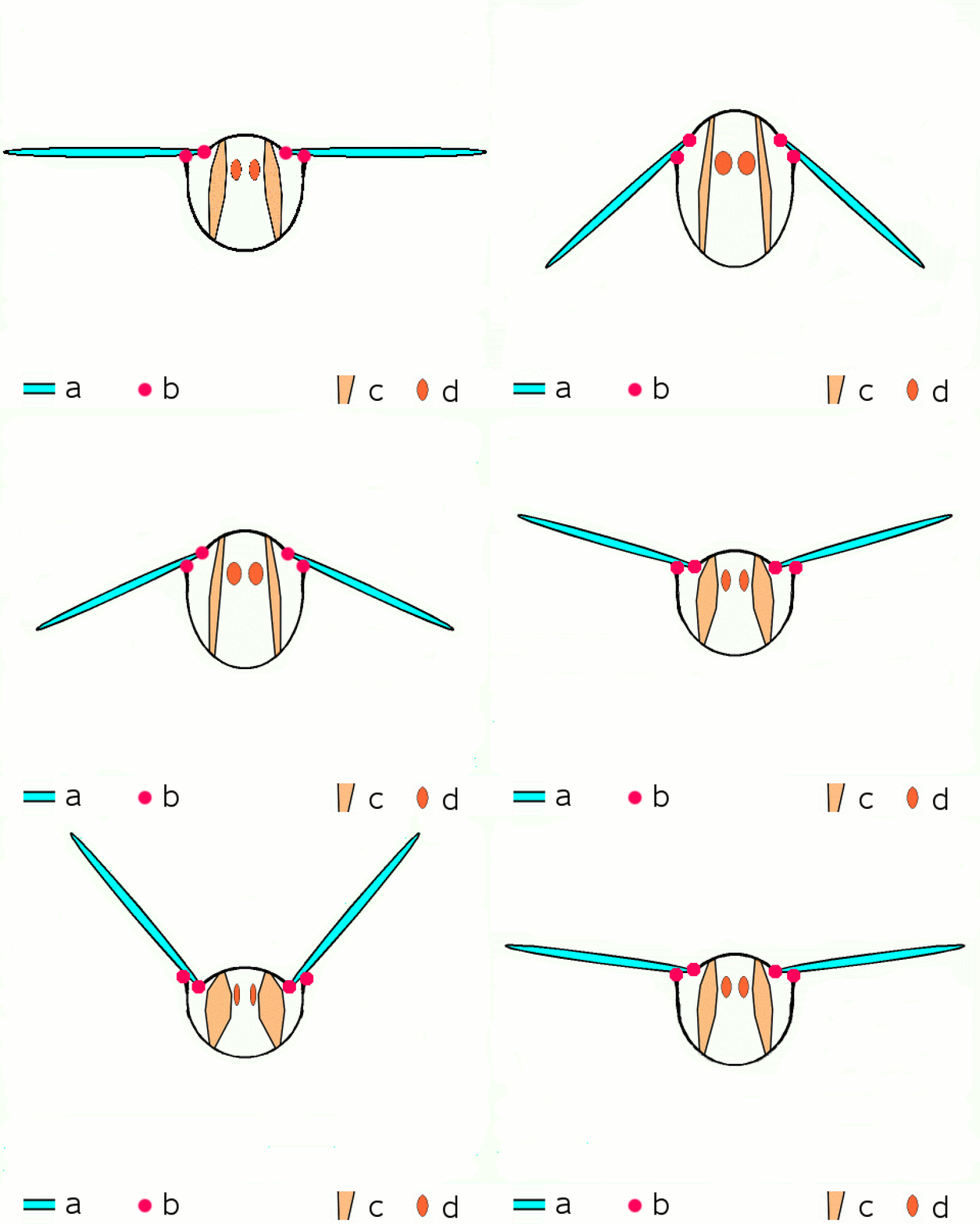
Siga. Motion of Insectwing. 2007. Wikimedia Commons, https://commons.wikimedia.org/wiki/File:Motion_of_Insectwing.gif.
As a result, some species reduce or lose their ability to fly entirely. Energy that would have been spent developing and maintaining wings and flight muscles can instead be redirected toward reproduction, feeding, or survival.
For example, the granary weevil is bound to human activity by its inability to fly, yet finds great success within it. In contrast, the rice weevil retains a more “wild” strategy, capable of infesting grain in the field and dispersing beyond strictly anthropogenic environments. The granary weevil, with its fused elytra, gains compensatory advantages including improved moisture conservation and increased physical protection that suit it well to the dry, stable conditions of stored grain.
In the end, insect flight is less about flying than it is about achieving the most with the least input. It is a system refined to minimize cost while maximizing function, whether that be through the amazing mechanics of powered flight or through its strategic loss when no longer needed. The same principles that once allowed insects to reclaim the skies now govern their success in the human environments we build.
more immediately relevant to management decisions than the community revealed by whole-home inventories.
Insects Limited, an Insect Pheromone Company
Insects Limited, Inc. researches, tests, develops, manufactures and distributes pheromones and trapping systems for insects in a global marketplace. The highly qualified staff also can assist with consultation, areas of expert witness, training presentations and grant writing.
Insects Limited, Inc. specializes in a unique niche of pest control that provides mainstream products and services to protect stored food, grain, museum collections, tobacco, timber and fiber worldwide. Please take some time to view these products and services in our web store.


