
Top 5 Things to Know About the Tobacco Moth
The Tobacco Moth (Ephestia elutella) is one of the most economically significant stored product moths found around the world. Despite its name, this pest infests far more than tobacco – impacting food processors, warehouses, distribution centers, and raw ingredient storage facilities across multiple industries.
Whether you manage commodities, food products, or pest management programs, understanding this moth is essential for preventing product loss and maintaining effective sanitation programs.
Here are the top five things you should know about identifying, managing, and preventing Tobacco Moth infestations.
1. Tobacco Moths Attack a Wide Range of Products
While traditionally associated with cured tobacco leaves, Tobacco Moths feed on many dried plant-based materials, including:
Tobacco and tobacco products
Cocoa beans and chocolate ingredients
Grains and cereals
Dried fruits and nuts
Spices and herbs
Animal feed and plant-based materials
Their ability to thrive on various commodities makes them a major concern across supply chain – from farms to processors to storage warehouses.
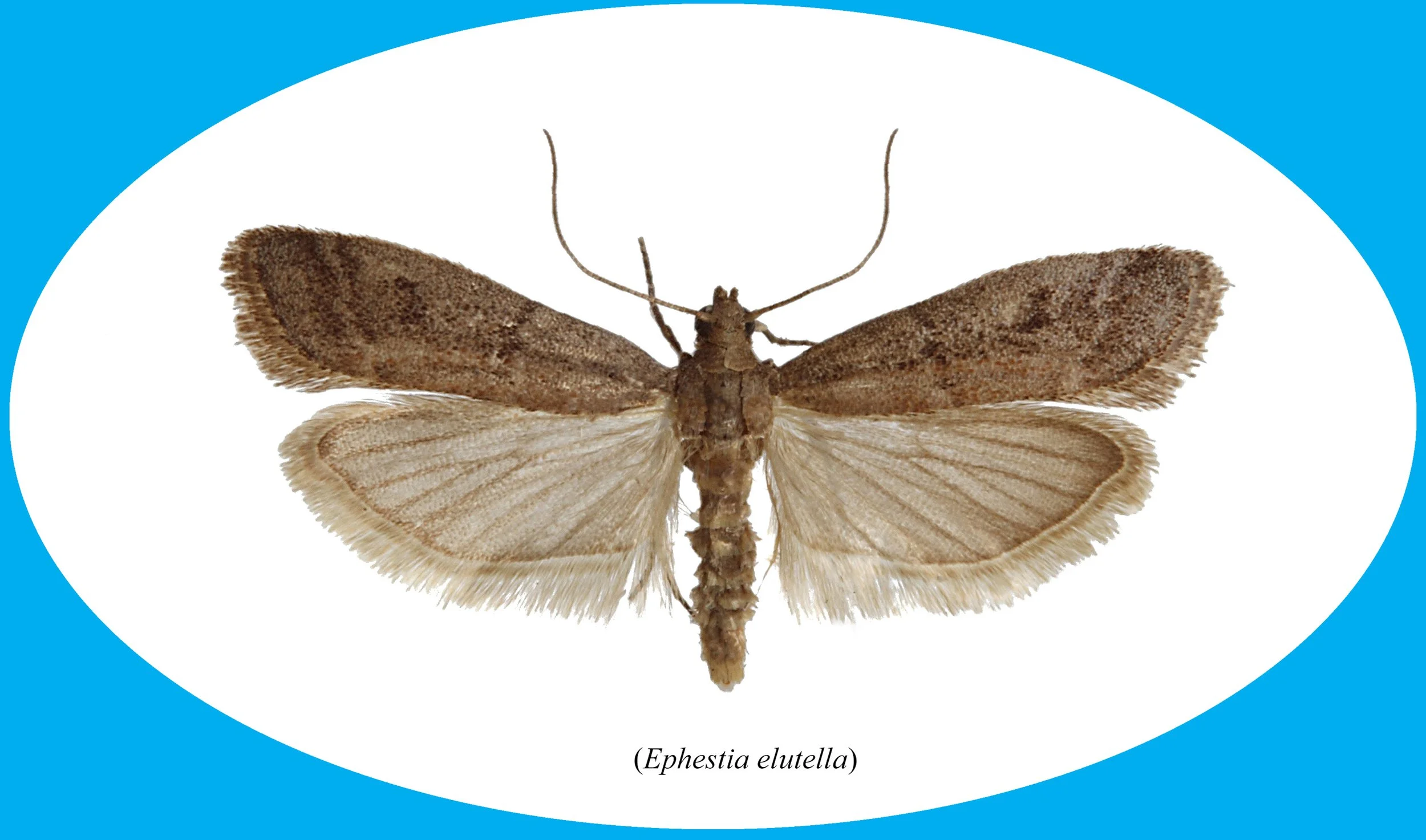
2. Larvae Are the Most Damaging Stage
Like many stored product moths, the adult moths don’t cause the damage – the larvae do.
Tobacco Moth larvae are:
Cream to dirty-white in color
Silk-spinning, leaving behind webbing inside product or packaging
This silk webbing often causes clumping, reduced product quality, and contamination concerns.
3. Tobacco Moths Life Cycle Allows Populations to Grow Quickly
Warm temperatures accelerate the Tobacco Moth’s development. In optimal conditions, their complete life cycle – egg to adult – can be completed in as little as 30-50 days.
A few key life cycle highlights:
Females lay eggs directly on or near food sources
Larvae feed for 2-6 weeks
Pupation often occurs on product surfaces, pallet corners, or nearby structures
Adults emerge ready to mate and restart the cycle
Because of their fast reproduction, even a small initial population can expand rapidly if monitoring isn’t in place.
4. Recognizing the Signs of Tobacco Moth Activity is Critical
Early detection is one of the most effective ways to limit product loss and reduce treatment costs. Look for:
Silk webbing on dried goods or packaging
Clumping or “webbed-over” product
Shed larval skins and frass
Greyish moths flying near lights or storage racks
Infested raw materials that appear dusty or webbed
Monitoring these visual signs – combined with pheromone traps – helps pinpoint activity before it spreads.
5. Monitoring Is the First Step in Prevention and Management of Tobacco Moths
Effective approaches include:
Pheromone monitoring traps
Routine inspections of raw materials and incoming shipments
Tight sanitation programs that remove food debris
Structural exclusion to limit adult moth movement
At Insects Limited, our pheromone- based monitoring tools are designed to detect Tobacco Moth activity early, helping you make proactive decisions that protect products and facilities.

Each All Beetle Trap Kit with RTU Gel Cartridge comes with 10 of the clear top, blue base, and snap-in replaceable tray as well as 10 packets of the multi-species food infesting insect attractant to help ensure there are no insects in the food you are trying to protect.

This kit includes multi-species beetle attractants packaged in individually sealed and ready to use Re-Bait cartridges. Each cartridge containis a pheromone and food attractant gel mix that is used to monitor for the presence of food infesting beetles including; Cigarette Beetle, Lasioderma serricorne, Warehouse Beetle, Trogoderma variabile, Red Flour Beetle, Triboluium castaneum, Confused Flour Beetle, Tribolium confusum, Saw-Toothed Grain Beetles, Oryzaephilus surinamensis, Merchant Grain Beetle, Oryzaephilus mercator, Flat Grain Beetles, Crytolestes pusillus, and many other species of food-infesting beetles.
Insects Limited, an Insect Pheromone Company
Insects Limited, Inc. researches, tests, develops, manufactures and distributes pheromones and trapping systems for insects in a global marketplace. The highly qualified staff also can assist with consultation, areas of expert witness, training presentations and grant writing.
Insects Limited, Inc. specializes in a unique niche of pest control that provides mainstream products and services to protect stored food, grain, museum collections, tobacco, timber and fiber worldwide. Please take some time to view these products and services in our web store.
