
5 Things to Know About the Casemaking Clothes Moth
The Casemaking Clothes Moth (Tinea pellionella) is a common textile pest that can cause significant damage to natural fibers. Unlike other household moths, these tiny invaders are notorious for their destructive feeding habits and their ability to go unnoticed until the damage is done. Here are five key things you should know about the casemaking clothes moth and how to protect your belongings from infestation.

1. Casemaking Clothes Moth Larvae Carry Their Own Portable Home
One of the most distinguishing features of the casemaking clothes moth is the silken case it creates around itself during the larval stage. This protective case, made from silk and bits of fabric or debris from their environment, camouflages the larvae as they feed. As the larvae grow, they enlarge their cases, making them mobile yet well-hidden within infested materials.
2. Casemaking Clothes Moths Prefer Animal-Based Fibers
Casemaking clothes moths feed on materials that contain keratin, a protein found in animal fibers such as wool, fur, feathers, mohair, and silk. Infestations are common in stored clothing, upholstered furniture, carpets, and even museum artifacts. They tend to avoid synthetic fibers unless blended with natural materials.
3. Casemaking Clothes Moths Are Often Confused with the Webbing Clothes Moth
Casemaking clothes moths are frequently mistaken for the webbing clothes moth (Tinea bisselliella), another fiber-damaging pest. However, a key difference is that casemaking clothes moth larvae create and carry around a silken case wherever they go, while webbing clothes moth larvae travel about with no case on their back. Webbing clothes moths do make cases when they pupate, but you will not see a webbing clothes moth larva drag around its case. Webbing clothes moths spin silk webbing directly on their feeding site and usually cover the webbing in their pepper-like frass. Casemaking clothes moth frass typically falls easily off the rug or clothes that they are consuming. Recognizing this distinction can help in proper identification and treatment.
4. Adult Casemaking Clothes Moths Don’t Cause Damage - Their Larvae Do
While adult casemaking clothes moths are harmless, their larvae are responsible for destroying textiles. The adult moths have a short lifespan and do not feed, focusing solely on reproduction. The real threat comes from the larvae, which can survive for several months feeding on organic fibers before pupating into moths.
5. Prevention is Key to Avoiding Infestations
Casemaking clothes moths thrive in dark, undisturbed areas, making closets, storage, and attics prime locations for infestations. To prevent damage:
Regularly inspect and clean clothes, rugs, and furniture.
Store wool and fur items in airtight, moth resistant garment bags.
Use pheromone monitoring traps to detect moth activity early.
Freeze infested materials for 72 hours to kill larvae and eggs.
Maintain proper storage conditions with low humidity and good airflow.
By understanding the habits of casemaking clothes moths and taking preventative measures, you can protect your textiles and keep these damaging pests at bay.

Clothes Moth Flat Traps™ and pheromone Bullet Lures™ for Clothes Moth species such as the Webbing Clothes Moths (Tineola bisselliella), Casemaking Clothes Moths (Tinea pellionella), and Brown-Dotted Clothes Moth (Niditinea fuscella).

The Casemaking Clothes Moth Kit (IL-220-10) features Insect Limited’s signature pheromone Bullet Lures™ that attract casemaking clothes moths with a controlled release of pheromone over 3 months. The Bullet Lures™ are paired with the NoSurvivor Trap™.
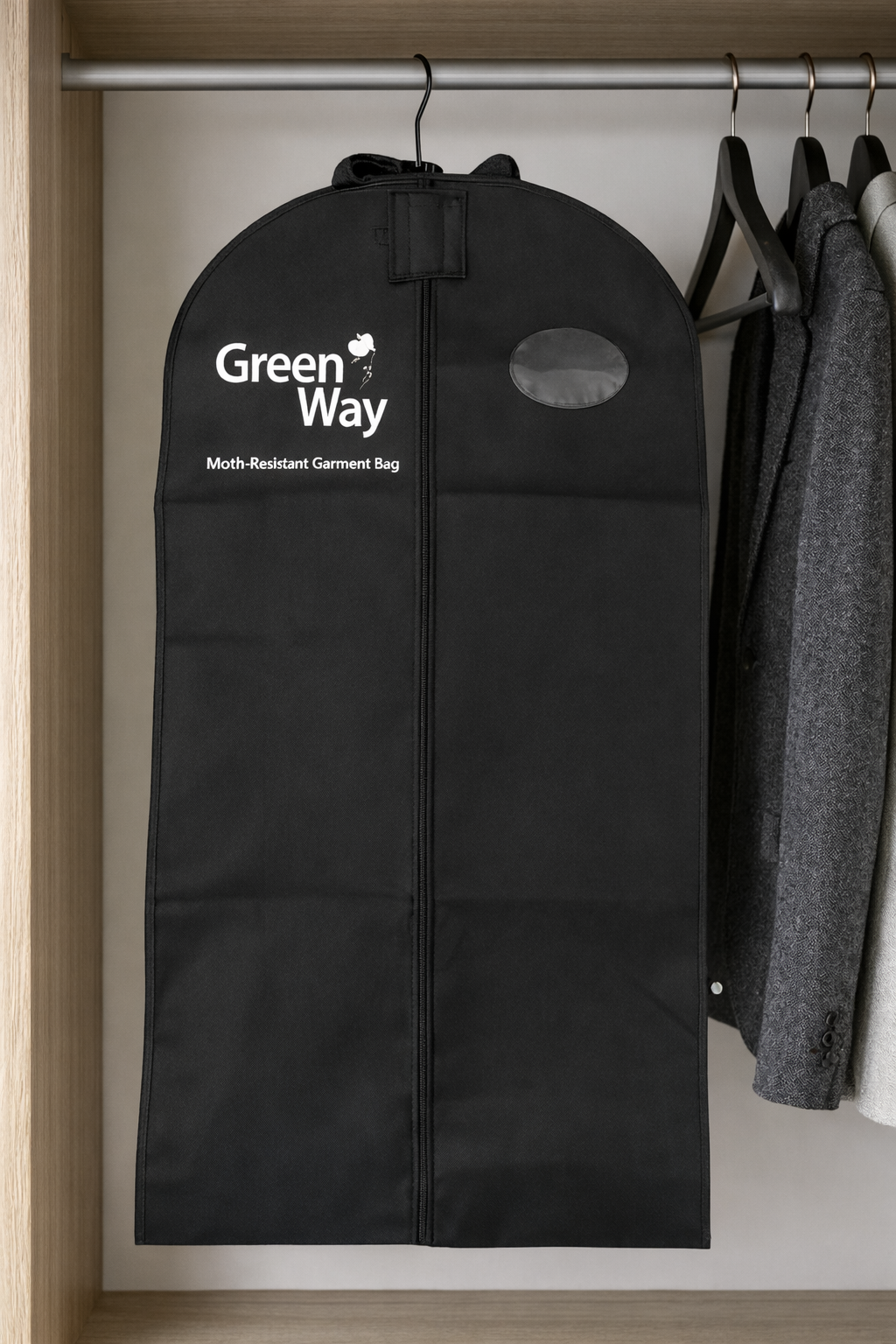
The GreenWay garment bag acts as a protective barrier against clothes moths, while allowing for breathable storage that maintains fabric integrity over time.
The sealed zipper system and reinforced closure points help prevent moth entry, while the clear viewing panel makes routine inspection simple and effective.

Set of 5 reusable Freezer Treatment Bags with a zip-top closure. Metalized polyethylene freezer bag helps ensure a quick freeze. Clothes moth larvae and eggs can be killed with long exposure to freezing temperatures. Items that you wish to freeze can be placed in Freezer Treatment Bags.
Learn More About Casemaking Clothes Moths
For expert guidance on moth identification, prevention, and pheromone monitoring solutions, explore our range of professional-grade pest management products.
Insects Limited, an Insect Pheromone Company
Insects Limited, Inc. researches, tests, develops, manufactures and distributes pheromones and trapping systems for insects in a global marketplace. The highly qualified staff also can assist with consultation, areas of expert witness, training presentations and grant writing.
Insects Limited, Inc. specializes in a unique niche of pest control that provides mainstream products and services to protect stored food, grain, museum collections, tobacco, timber and fiber worldwide. Please take some time to view these products and services in our web store.
