A Two-Year Picture of Insects Limited's Native Prairie Habitat

By Samantha Kiever, Research Entomologist, Insects Limited
When most people picture pest management, they imagine someone in uniform spraying baseboards or a home's perimeter, maybe that person is even you. It's an understandable image, and honestly, a lot of that fear and misunderstanding around insects comes from not knowing much about them beyond "get it away from me." But that image leaves out something important: pest management and conservation aren't opposites. They're deeply connected.
Why Integrated Pest Management Is a Conservation Tool
Integrated pest management (IPM) isn't just a more effective way to control pests, it's a system built to balance the needs of every party involved, human and ecological. Rather than aiming to eliminate every organism in sight, IPM focuses on managing the ones that actually cause harm, weighed against what's at stake if we act versus if we don't. It's the same philosophy behind monitoring for multiple pest species at once rather than reacting to one problem at a time, know what's actually out there before you act on it.
A strong IPM program starts with inspection and monitoring for known or possible pests. At its core, that's what conservation is too: stewardship, protecting what matters while avoiding unnecessary loss, whether that's a stored food supply, a family heirloom, or a native ecosystem. Equipping people with the tools to act only when necessary, and only in the most effective way, is what turns pest management into a conservation practice.
Turning an Empty Lot Into Native Habitat
When Insects Limited moved into its current facility, there was a big stretch of unused land behind the building, and a choice to make. The team decided to put that space to work for native plants and animals, especially native insects, by seeding and planting a native prairie habitat from scratch.
Two years after the first seeds and plant plugs went into the ground, the prairie is still finding its final shape. But with a full summer behind it, it's already home to a growing list of native wildlife. Here's a look at who's moved in.
Bees Galore
![Bee pollinating [white clover / red clover / purple flower / coreopsis] in native prairie habitat](https://images.squarespace-cdn.com/content/v1/5f85d31d86a30c227b913863/1784767313578-8GBT28TE5S83IQT7BHVX/bees-04.png)
![Bee pollinating [white clover / red clover / purple flower / coreopsis] in native prairie habitat](https://images.squarespace-cdn.com/content/v1/5f85d31d86a30c227b913863/1784767313720-TLV0FV5MD7U85U4XVW1C/bees-03.png)
![Bee pollinating [white clover / red clover / purple flower / coreopsis] in native prairie habitat](https://images.squarespace-cdn.com/content/v1/5f85d31d86a30c227b913863/1784767321786-BK3SW2IFWEXD5KV4AO8E/bees-02+%281%29.png)
![Bee pollinating [white clover / red clover / purple flower / coreopsis] in native prairie habitat](https://images.squarespace-cdn.com/content/v1/5f85d31d86a30c227b913863/1784767332802-C5VI1WCP94ZMJDMC9NKL/bees-01.png)
Bees have been some of the most visible residents of the new habitat, working clover, coreopsis, and other native blooms throughout the growing season. Their presence is a strong early sign that the prairie is functioning the way it's meant to, as a real food source for pollinators, not just a planting plan on paper.
Beetles on the Move
![[Dark leaf beetle / red milkweed beetle / black-eyed Susan with beetle] in native prairie habitat](https://images.squarespace-cdn.com/content/v1/5f85d31d86a30c227b913863/1784767574550-XRTY1QNHY3L09J7E9AGQ/beetles-02+%281%29.png)
![[Dark leaf beetle / red milkweed beetle / black-eyed Susan with beetle] in native prairie habitat](https://images.squarespace-cdn.com/content/v1/5f85d31d86a30c227b913863/1784767573494-HNVICMNVC29KVJECAK73/beetles-04+%281%29.png)
![[Dark leaf beetle / red milkweed beetle / black-eyed Susan with beetle] in native prairie habitat](https://images.squarespace-cdn.com/content/v1/5f85d31d86a30c227b913863/1784767576462-DSECH7YP36WXFYTOPQ31/beetles-03+%281%29.png)
![[Dark leaf beetle / red milkweed beetle / black-eyed Susan with beetle] in native prairie habitat](https://images.squarespace-cdn.com/content/v1/5f85d31d86a30c227b913863/1784767581158-ZNX5FR5YPTB0JWCMUQ8Y/beetles-01.png)
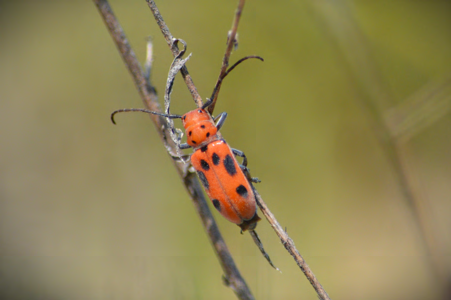
Beetles have also taken up residence, including striking red milkweed beetles found perched on native stems and glossy dark beetles working their way across foliage. Beetles play an outsized role in a healthy prairie ecosystem, from pollination to breaking down plant material, and their presence adds another layer of biodiversity to the site, a good reminder that most beetles are doing exactly what they should be doing outdoors. It's only when species like the black carpet beetle end up indoors, feeding on stored goods or textiles, that beetles become a problem worth monitoring for.
Ants Building Underground
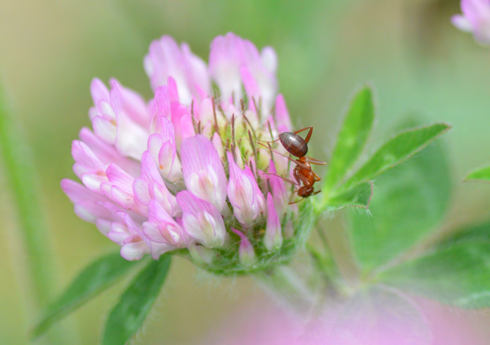
Look closely at the bare soil between plantings and you'll find ant colonies hard at work, foraging across clover blooms and building nest entrances in sandy patches. Ants are easy to overlook, but they're active soil engineers and an important part of the prairie's underground ecosystem.
And So Much More
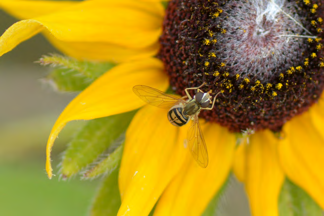
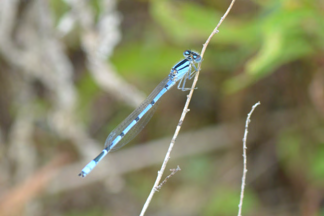
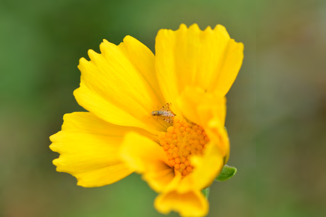
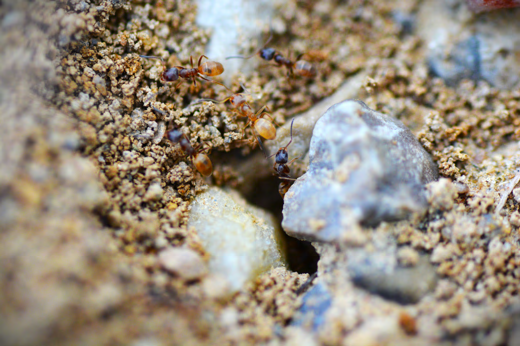
Bees, beetles, and ants are only part of the story. Two years in, the habitat has also attracted grasshoppers, a damselfly, ground-nesting birds like a killdeer along the parking lot curb, a seed-eating songbird tucked into the wildflowers, and a steady rotation of native blooms like black-eyed Susan and coreopsis moving through their bloom cycles. Every new sighting is another data point confirming the habitat is doing its job.
Why This Matters Beyond One Backyard Prairie
This project is a small-scale example of a larger idea: pest management done well doesn't have to come at the expense of the natural world, it can actively support it. That's the same thinking behind our work helping museums, libraries, and historic houses protect cherished, irreplaceable belongings, stewardship, not just extermination. By building habitat instead of just managing the space behind its own building, Insects Limited is putting its IPM philosophy into practice, not just preaching it.
Interested in how IPM principles apply to your own pest challenges, at home, in a food facility, or in a museum collection? Explore our pest identification resources, browse past issues of our Fumigants & Pheromones newsletter, or get in touch with our team to talk through an approach that protects what matters most to you.

