
Turning Every Fumigation into a Learning Opportunity

By Tom Mueller, CEO of Insects Limited

It's not often I get challenged to present on a new topic. Usually it's the typical stored product insect identification, behavior, and biology, or high-level practical uses of pheromones. But in early June, I was asked to give a presentation on a concept that isn't new, just one I hadn't previously presented: post-fumigation efficacy verification using bioassays and pheromone monitors.
The room was full of experienced fumigators. They already knew the basics of pest biology and behavior, so my job was to connect the dots, how a target pest's life cycle biology pairs with the timing of pheromone monitor catches, and how that connection determines whether a commodity fumigation actually succeeded.
The Question Every Fumigation Should Answer
Commodity fumigation is a significant investment for both the customer and the fumigation provider. Planning, labor, equipment, downtime, and the value of the commodity itself all factor into the cost of treatment. So when the fumigation is complete and the facility is cleared for re-entry, one question matters more than any other: did the treatment actually work?
Gas readings taken during the fumigation tell part of that story. But the most reliable way to answer the question is to ask the insects themselves, and that's exactly what a post-fumigation monitoring program using insect bioassays and pheromone monitoring is built to do. Together, these tools verify treatment efficacy, flag potential problem areas, and improve every fumigation that follows.
What Bioassays Reveal Immediately
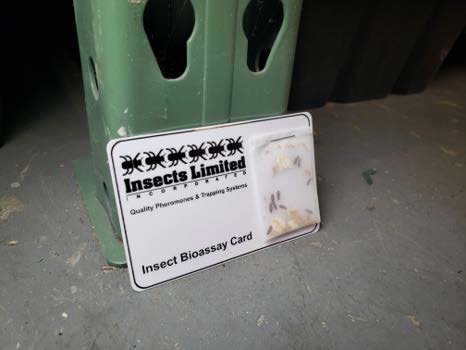
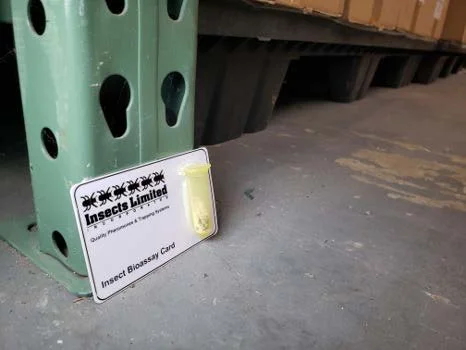
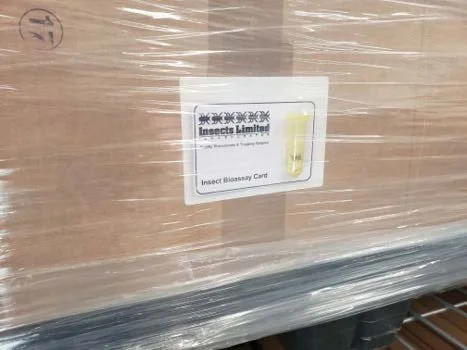
Bioassays give an immediate read on fumigation performance. By strategically placing live insects throughout the treatment area before the fumigation begins, fumigators can quickly evaluate mortality once treatment is complete. If mortality isn't achieved in a particular spot, that's a signal, it may point to insufficient fumigant concentration or exposure time in that area, poor gas circulation, structural leaks, dead air spaces, or commodity configurations that blocked fumigant movement.
But immediate mortality is only part of the story. Eggs and pupae tend to tolerate fumigants better than adults, and some stressed females may lay eggs before dying. A surviving adult might also be incapable of producing viable offspring because of the fumigation's effects. That's why holding bioassays for three to four weeks after treatment matters, it gives enough time to observe any insect emergence or reproductive success, which paints a much more complete picture of whether the fumigation actually worked.
How Pheromone Monitoring Fills in the Rest
Pheromone monitoring complements bioassays by tracking pest activity across the facility over time. Installing fresh pheromone monitors immediately before fumigation establishes a baseline. Checking them right after treatment identifies any surviving adults still active. Continuing to inspect those monitors weekly for the next three to four weeks helps determine whether any insects completed their life cycle after the fumigation, a key sign of whether the treatment held.
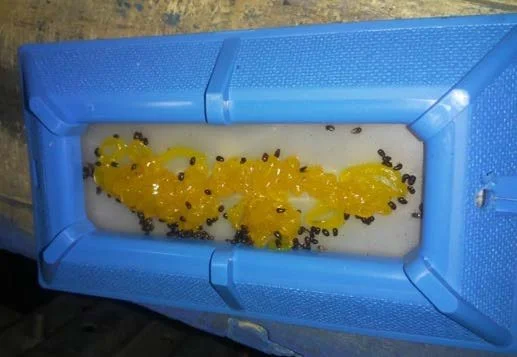
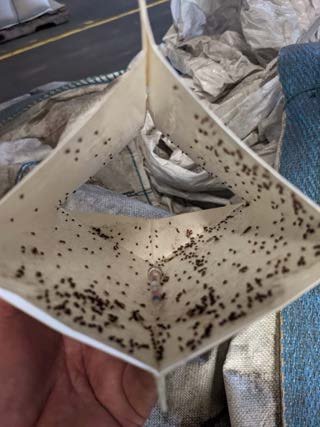
Comparing post-fumigation results against historical monitoring trends adds even more insight. If activity keeps showing up concentrated in the same areas, that's worth a second look, maybe those locations need additional inspection, or a change to the next fumigation strategy. The goal here isn't to assign blame. It's to open up a constructive conversation between customer and fumigator that leads to better planning, better gas distribution, and stronger treatments going forward.
Verification Is What Turns a Treatment into a Documented Success
A fumigation shouldn't simply end when the gas is removed. Verification is what transforms a completed treatment into a documented success. By combining bioassays with post-fumigation pheromone monitoring, facilities gain real confidence that their investment achieved its purpose, while building a stronger foundation for protecting food products, safeguarding brands, and continuously improving their pest management program.
Want to build a stronger post-fumigation monitoring program for your facility? Explore our pheromone monitoring products, read more on organic fumigation methods, or get in touch with our team to talk through a verification approach built around your commodity and facility.
